

Etsy describes itself as a global online marketplace where people make, sell, buy and collect special items. Its affiliate offer has two programs, and choosing the wrong one is the first mistake to avoid. This guide reads Etsy’s own pages and Pinterest’s rules. It is part of our overview of earning with Pinterest as a blogger (opens in a new tab), and the steps that come before any program are in the beginner affiliate roadmap for Pinterest (opens in a new tab).
How the Etsy affiliate program works
Etsy’s help page says affiliates earn commissions on qualifying sales that result from featuring links to products offered on Etsy and other Etsy content on their site, while Creator Collective members earn them from links on their social media channels. Etsy’s affiliates page describes the commission as a percentage of revenue. Neither page read for this guide gives the rate, so check it when you apply.
The help page lists what you agree to when you join. It says there’s no contract to sign, but that you agree to the Terms and Conditions of Rakuten, Etsy’s third-party partner, and to Etsy’s Affiliates Program Terms of Use or Creator Collective Terms of Use. You can leave the program at any time, and Etsy may also remove affiliates and creators at any time.
Etsy says it supports affiliates and creators in English, French, German, Italian and Spanish. Members of both programs get exclusive content, trend reports and giveaways.
Affiliates program or Creator Collective: which one fits a Pinterest blogger?
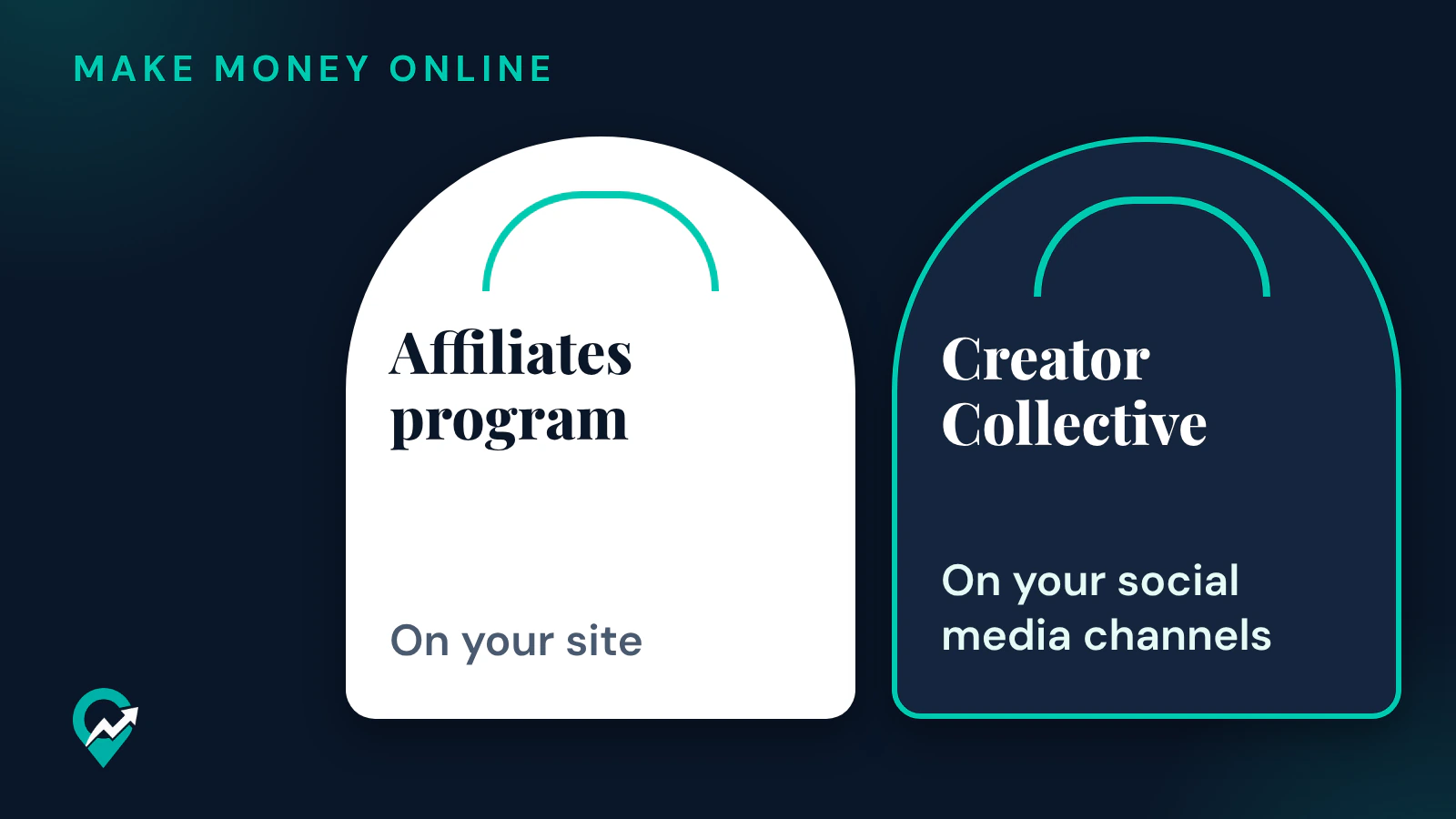
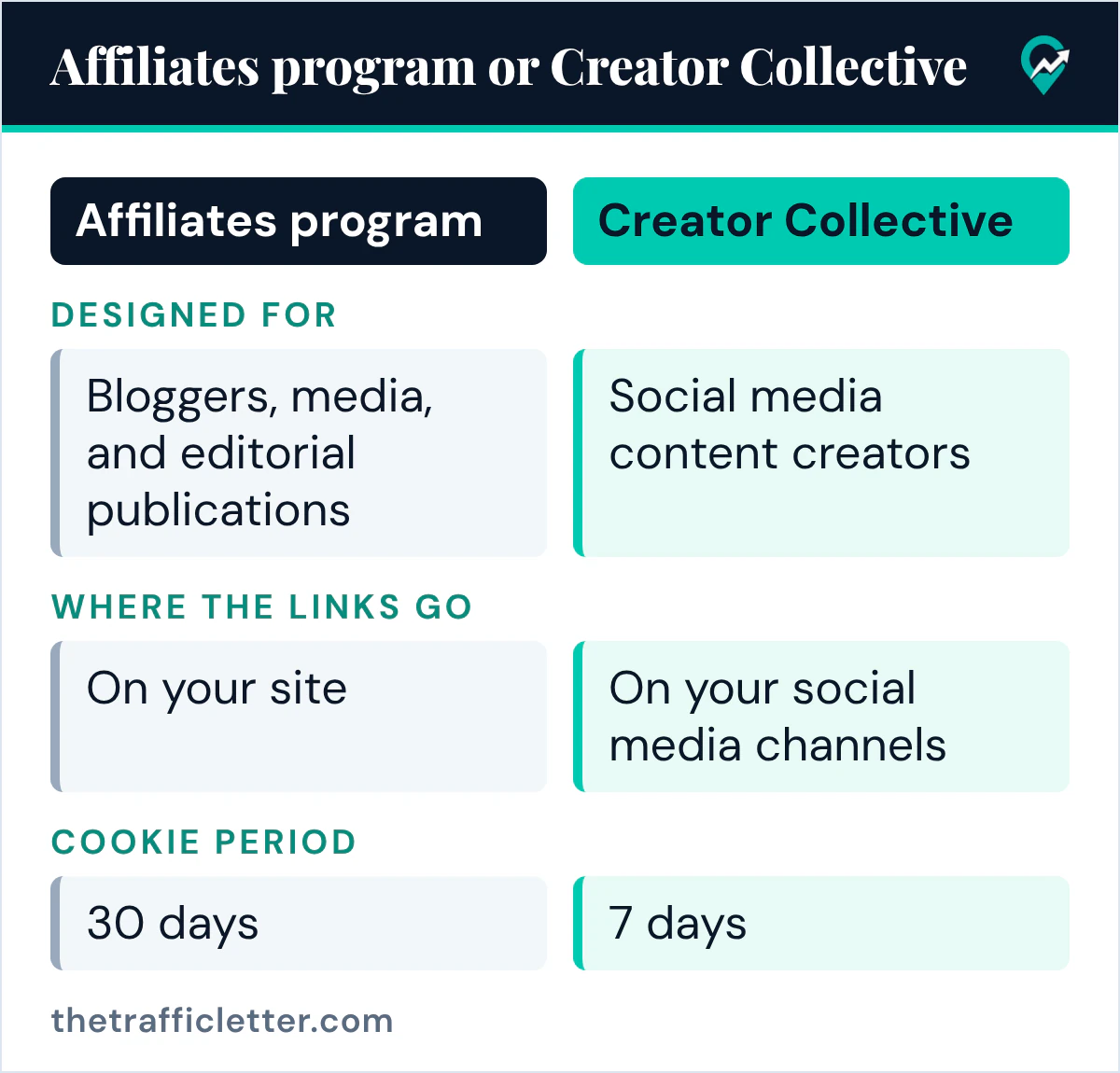
Etsy’s help page says: “When applying, select the program that corresponds to where you receive the most traffic.” The two programs differ on four points.
| Affiliates program | Creator Collective | |
|---|---|---|
| Designed for | Bloggers, media, and editorial publications | Social media content creators |
| Where the links go | On your site | On your social media channels |
| Entry condition on the pages read | Anyone who qualifies; cashback sites and voucher sites are not eligible | A minimum of 500 followers on at least one authorized channel |
| Cookie period | 30 days | 7 days |
For a blogger who uses Pinterest to send readers to a blog, the Etsy links sit on the blog, which matches the Affiliates program. Creator Collective fits a creator whose links live on social media. Etsy’s help page points to the Creator Collective Terms of Use for full details on eligibility; that page could not be read for this guide, so check there whether Pinterest is an authorized channel before you apply to Creator Collective.
The help page adds one difference that may change later: creators can set up an Etsy Storefront, a curated, shoppable page on Etsy, and Etsy says affiliates will be able to in the future.
Commission, cookie period and payment
Etsy’s help page gives these terms:
- Each qualifying sale earns a commission, excluding tax, shipping, returns and cancellations. Commission is paid on the order price, excluding shipping costs and VAT.
- The cookie period is 30 days for affiliates, 7 days for creators and 7 days for sales through the Etsy app, for either program.
- In your Rakuten account you choose direct deposit, PayPal or check.
- Commission appears in Rakuten within 24 to 48 hours after a sale is completed on Etsy, but the payout waits until the order is validated after Etsy’s return window closes, which the help page puts at 7 to 14 days.
Etsy’s affiliates page words the timing differently: it says commissions are typically validated 30 days after the sale date to account for returns or cancellations. The two pages do not give the same delay, so plan for the longer one.
The 7-day app window matters on Pinterest too: if a reader clicks from your post on a phone and buys in the Etsy app, that sale counts on the shorter window, even in the Affiliates program.
How to use Etsy links on Pinterest
Pinterest’s creator page says you can tag Pins using affiliate links once you have joined a program, and that Pinterest isn’t part of the affiliate agreements, so your commission depends on the terms you agreed with the program. For a blogger, the simplest route is a Pin that links to a post on your blog, with the Etsy links inside the post.
What makes that post useful is the same thing Pinterest’s affiliate guidelines ask for: affiliate content should be original and add unique value for Pinners. A gift guide that explains who each item suits, a room makeover that names the pieces used, or a craft tutorial with the supplies listed all give a Pinner a reason to click.
Pinterest’s affiliate guidelines also ask you to:
- Be transparent about the commercial nature of your content and about your links and their behavior.
- Follow the paid partnership guidelines, which give the use of #ad as an example of a clear disclosure.
- Use affiliate links in moderation, without creating affiliate Pins repetitively or in large volumes.
Pinterest’s Community Guidelines add the “no surprises” principle: Pinners should be able to reasonably anticipate where your link will take them. A Pin that shows a gift idea and links to a gift guide meets it. Where to write the disclosure on the Pin and on the post is covered in Pinterest’s rules for affiliate links (opens in a new tab). This is general information, not legal advice.
Choose the niche before the program. This guide’s suggestion is a niche where handmade or vintage items solve a real need, such as gifts or home projects, and our guide to choosing an affiliate niche (opens in a new tab) shows how to test one in Pinterest Trends.
A prompt for an Etsy gift guide outline
An AI assistant can draft the outline of the post your Pins will link to. The prompt works in ChatGPT, Claude, Gemini or any AI assistant.
I am writing a blog post that recommends Etsy items: [topic, for example "gifts for a new gardener"].
My readers: [who they are].
Items I picked and why: [item name, what it is, why it fits].
Write an outline for the post with:
1. A short intro that says the post contains affiliate links.
2. One section per item: who it suits, what problem it solves, one honest limit.
3. A short section on how to choose between the items.
Do not invent prices, ratings, reviews or seller details. Use only the notes above.
Then write the post yourself from the outline, with your own reasons for each pick.
Right after
- Read the Affiliates Program Terms of Use when you apply, and note the commission rate and the authorized channels.
- Compare Etsy with other options in our comparison of affiliate programs for Pins (opens in a new tab).
- Draft the first Pin with one of the Pin formats for affiliate links (opens in a new tab).